Query and Mutate with Cypher
Use Cypher when the task is a graph pattern or a row pipeline rather than one
known-ID lookup. GraphDB.query returns QueryResult with columns and
records; iteration yields row dictionaries. Parameters supply values without
interpolating them into query text. See Choose How to Load and Query Data for direct lookup and
loading alternatives, and Cypher Queries for the detailed supported syntax.
Read a pattern and aggregate its rows
Standalone runnable example. Install gestaltdb[lmdb]. This small graph has
two drugs and two proteins. The pattern binds a drug, a directed binds edge,
and its protein endpoint; WHERE filters the bound rows.
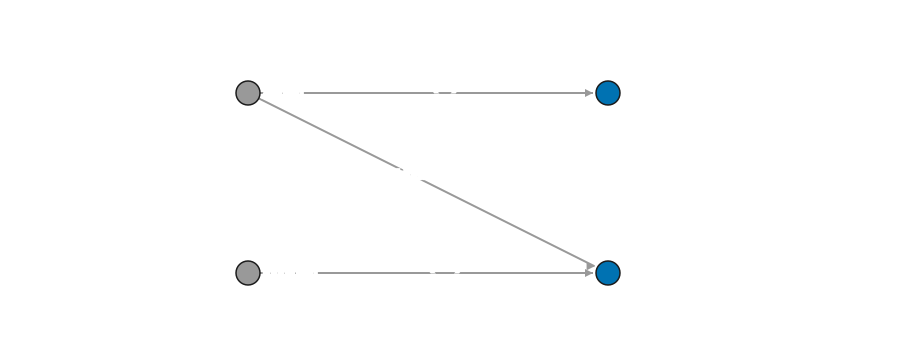
The tutorial’s stored graph, generated by visualize_nodes_edges. All three
edges are shown; the first query below selects only Aspirin’s PTGS1 target
when the minimum score is 0.8.
Standalone example. Choose the capability-qualified installation tab below.
Ordinary read/aggregate queries support these choices; automatic read pinning remains backend-qualified.
1python -m pip install "gestaltdb[lmdb]"
 1from tempfile import TemporaryDirectory
 2from gestaltdb.graphdb import Edge, GraphDB, Node
 3
 4with TemporaryDirectory() as root:
 5    with GraphDB.create(f"{root}/graph", backend='lmdb', serializer='json') as graph:
 6        graph.put_nodes([
 7            Node("d1", labels=["Drug"], properties={"name": "Aspirin"}),
 8            Node("d2", labels=["Drug"], properties={"name": "Ibuprofen"}),
 9            Node("p1", labels=["Protein"], properties={"name": "PTGS1"}),
10            Node("p2", labels=["Protein"], properties={"name": "PTGS2"}),
11        ])
12        graph.put_edges_bulk([
13            Edge("e1", "d1", "p1", properties={"type": "binds", "score": 0.9}),
14            Edge("e2", "d1", "p2", properties={"type": "binds", "score": 0.7}),
15            Edge("e3", "d2", "p1", properties={"type": "binds", "score": 0.95}),
16        ])
17        graph.create_node_property_index("name")
18        hits = graph.query(
19            "MATCH (d:Drug {name: $name})-[r:binds]->(p:Protein) "
20            "WHERE r.score >= $minimum RETURN p.name AS protein",
21            parameters={"name": "Aspirin", "minimum": 0.8},
22        )
23        assert hits.columns == ("protein",)
24        assert hits.records == [{"protein": "PTGS1"}]
25
26        counts = graph.query(
27            "MATCH (d:Drug)-[r:binds]->(p:Protein) WHERE r.score >= $minimum "
28            "WITH d.name AS drug, count(p) AS targets "
29            "RETURN drug, targets ORDER BY drug",
30            parameters={"minimum": 0.8},
31        )
32        assert counts.records == [
33            {"drug": "Aspirin", "targets": 1},
34            {"drug": "Ibuprofen", "targets": 1},
35        ]
1python -m pip install "gestaltdb[lmdb]"
 1from tempfile import TemporaryDirectory
 2from gestaltdb.graphdb import Edge, GraphDB, Node
 3
 4with TemporaryDirectory() as root:
 5    with GraphDB.create(f"{root}/graph", backend='lmdb', serializer='pickle') as graph:
 6        graph.put_nodes([
 7            Node("d1", labels=["Drug"], properties={"name": "Aspirin"}),
 8            Node("d2", labels=["Drug"], properties={"name": "Ibuprofen"}),
 9            Node("p1", labels=["Protein"], properties={"name": "PTGS1"}),
10            Node("p2", labels=["Protein"], properties={"name": "PTGS2"}),
11        ])
12        graph.put_edges_bulk([
13            Edge("e1", "d1", "p1", properties={"type": "binds", "score": 0.9}),
14            Edge("e2", "d1", "p2", properties={"type": "binds", "score": 0.7}),
15            Edge("e3", "d2", "p1", properties={"type": "binds", "score": 0.95}),
16        ])
17        graph.create_node_property_index("name")
18        hits = graph.query(
19            "MATCH (d:Drug {name: $name})-[r:binds]->(p:Protein) "
20            "WHERE r.score >= $minimum RETURN p.name AS protein",
21            parameters={"name": "Aspirin", "minimum": 0.8},
22        )
23        assert hits.columns == ("protein",)
24        assert hits.records == [{"protein": "PTGS1"}]
25
26        counts = graph.query(
27            "MATCH (d:Drug)-[r:binds]->(p:Protein) WHERE r.score >= $minimum "
28            "WITH d.name AS drug, count(p) AS targets "
29            "RETURN drug, targets ORDER BY drug",
30            parameters={"minimum": 0.8},
31        )
32        assert counts.records == [
33            {"drug": "Aspirin", "targets": 1},
34            {"drug": "Ibuprofen", "targets": 1},
35        ]
1python -m pip install "gestaltdb[lmdb,msgpack]"
 1from tempfile import TemporaryDirectory
 2from gestaltdb.graphdb import Edge, GraphDB, Node
 3
 4with TemporaryDirectory() as root:
 5    with GraphDB.create(f"{root}/graph", backend='lmdb', serializer='messagepack') as graph:
 6        graph.put_nodes([
 7            Node("d1", labels=["Drug"], properties={"name": "Aspirin"}),
 8            Node("d2", labels=["Drug"], properties={"name": "Ibuprofen"}),
 9            Node("p1", labels=["Protein"], properties={"name": "PTGS1"}),
10            Node("p2", labels=["Protein"], properties={"name": "PTGS2"}),
11        ])
12        graph.put_edges_bulk([
13            Edge("e1", "d1", "p1", properties={"type": "binds", "score": 0.9}),
14            Edge("e2", "d1", "p2", properties={"type": "binds", "score": 0.7}),
15            Edge("e3", "d2", "p1", properties={"type": "binds", "score": 0.95}),
16        ])
17        graph.create_node_property_index("name")
18        hits = graph.query(
19            "MATCH (d:Drug {name: $name})-[r:binds]->(p:Protein) "
20            "WHERE r.score >= $minimum RETURN p.name AS protein",
21            parameters={"name": "Aspirin", "minimum": 0.8},
22        )
23        assert hits.columns == ("protein",)
24        assert hits.records == [{"protein": "PTGS1"}]
25
26        counts = graph.query(
27            "MATCH (d:Drug)-[r:binds]->(p:Protein) WHERE r.score >= $minimum "
28            "WITH d.name AS drug, count(p) AS targets "
29            "RETURN drug, targets ORDER BY drug",
30            parameters={"minimum": 0.8},
31        )
32        assert counts.records == [
33            {"drug": "Aspirin", "targets": 1},
34            {"drug": "Ibuprofen", "targets": 1},
35        ]
1python -m pip install "gestaltdb[lmdb,protobuf]"
 1from tempfile import TemporaryDirectory
 2from gestaltdb.graphdb import Edge, GraphDB, Node
 3
 4with TemporaryDirectory() as root:
 5    with GraphDB.create(f"{root}/graph", backend='lmdb', serializer='protobuf') as graph:
 6        graph.put_nodes([
 7            Node("d1", labels=["Drug"], properties={"name": "Aspirin"}),
 8            Node("d2", labels=["Drug"], properties={"name": "Ibuprofen"}),
 9            Node("p1", labels=["Protein"], properties={"name": "PTGS1"}),
10            Node("p2", labels=["Protein"], properties={"name": "PTGS2"}),
11        ])
12        graph.put_edges_bulk([
13            Edge("e1", "d1", "p1", properties={"type": "binds", "score": 0.9}),
14            Edge("e2", "d1", "p2", properties={"type": "binds", "score": 0.7}),
15            Edge("e3", "d2", "p1", properties={"type": "binds", "score": 0.95}),
16        ])
17        graph.create_node_property_index("name")
18        hits = graph.query(
19            "MATCH (d:Drug {name: $name})-[r:binds]->(p:Protein) "
20            "WHERE r.score >= $minimum RETURN p.name AS protein",
21            parameters={"name": "Aspirin", "minimum": 0.8},
22        )
23        assert hits.columns == ("protein",)
24        assert hits.records == [{"protein": "PTGS1"}]
25
26        counts = graph.query(
27            "MATCH (d:Drug)-[r:binds]->(p:Protein) WHERE r.score >= $minimum "
28            "WITH d.name AS drug, count(p) AS targets "
29            "RETURN drug, targets ORDER BY drug",
30            parameters={"minimum": 0.8},
31        )
32        assert counts.records == [
33            {"drug": "Aspirin", "targets": 1},
34            {"drug": "Ibuprofen", "targets": 1},
35        ]
1python -m pip install "gestaltdb[leveldb]"
 1from tempfile import TemporaryDirectory
 2from gestaltdb.graphdb import Edge, GraphDB, Node
 3
 4with TemporaryDirectory() as root:
 5    with GraphDB.create(f"{root}/graph", backend='leveldb', serializer='json') as graph:
 6        graph.put_nodes([
 7            Node("d1", labels=["Drug"], properties={"name": "Aspirin"}),
 8            Node("d2", labels=["Drug"], properties={"name": "Ibuprofen"}),
 9            Node("p1", labels=["Protein"], properties={"name": "PTGS1"}),
10            Node("p2", labels=["Protein"], properties={"name": "PTGS2"}),
11        ])
12        graph.put_edges_bulk([
13            Edge("e1", "d1", "p1", properties={"type": "binds", "score": 0.9}),
14            Edge("e2", "d1", "p2", properties={"type": "binds", "score": 0.7}),
15            Edge("e3", "d2", "p1", properties={"type": "binds", "score": 0.95}),
16        ])
17        graph.create_node_property_index("name")
18        hits = graph.query(
19            "MATCH (d:Drug {name: $name})-[r:binds]->(p:Protein) "
20            "WHERE r.score >= $minimum RETURN p.name AS protein",
21            parameters={"name": "Aspirin", "minimum": 0.8},
22        )
23        assert hits.columns == ("protein",)
24        assert hits.records == [{"protein": "PTGS1"}]
25
26        counts = graph.query(
27            "MATCH (d:Drug)-[r:binds]->(p:Protein) WHERE r.score >= $minimum "
28            "WITH d.name AS drug, count(p) AS targets "
29            "RETURN drug, targets ORDER BY drug",
30            parameters={"minimum": 0.8},
31        )
32        assert counts.records == [
33            {"drug": "Aspirin", "targets": 1},
34            {"drug": "Ibuprofen", "targets": 1},
35        ]
1python -m pip install "gestaltdb[leveldb]"
 1from tempfile import TemporaryDirectory
 2from gestaltdb.graphdb import Edge, GraphDB, Node
 3
 4with TemporaryDirectory() as root:
 5    with GraphDB.create(f"{root}/graph", backend='leveldb', serializer='pickle') as graph:
 6        graph.put_nodes([
 7            Node("d1", labels=["Drug"], properties={"name": "Aspirin"}),
 8            Node("d2", labels=["Drug"], properties={"name": "Ibuprofen"}),
 9            Node("p1", labels=["Protein"], properties={"name": "PTGS1"}),
10            Node("p2", labels=["Protein"], properties={"name": "PTGS2"}),
11        ])
12        graph.put_edges_bulk([
13            Edge("e1", "d1", "p1", properties={"type": "binds", "score": 0.9}),
14            Edge("e2", "d1", "p2", properties={"type": "binds", "score": 0.7}),
15            Edge("e3", "d2", "p1", properties={"type": "binds", "score": 0.95}),
16        ])
17        graph.create_node_property_index("name")
18        hits = graph.query(
19            "MATCH (d:Drug {name: $name})-[r:binds]->(p:Protein) "
20            "WHERE r.score >= $minimum RETURN p.name AS protein",
21            parameters={"name": "Aspirin", "minimum": 0.8},
22        )
23        assert hits.columns == ("protein",)
24        assert hits.records == [{"protein": "PTGS1"}]
25
26        counts = graph.query(
27            "MATCH (d:Drug)-[r:binds]->(p:Protein) WHERE r.score >= $minimum "
28            "WITH d.name AS drug, count(p) AS targets "
29            "RETURN drug, targets ORDER BY drug",
30            parameters={"minimum": 0.8},
31        )
32        assert counts.records == [
33            {"drug": "Aspirin", "targets": 1},
34            {"drug": "Ibuprofen", "targets": 1},
35        ]
1python -m pip install "gestaltdb[leveldb,msgpack]"
 1from tempfile import TemporaryDirectory
 2from gestaltdb.graphdb import Edge, GraphDB, Node
 3
 4with TemporaryDirectory() as root:
 5    with GraphDB.create(f"{root}/graph", backend='leveldb', serializer='messagepack') as graph:
 6        graph.put_nodes([
 7            Node("d1", labels=["Drug"], properties={"name": "Aspirin"}),
 8            Node("d2", labels=["Drug"], properties={"name": "Ibuprofen"}),
 9            Node("p1", labels=["Protein"], properties={"name": "PTGS1"}),
10            Node("p2", labels=["Protein"], properties={"name": "PTGS2"}),
11        ])
12        graph.put_edges_bulk([
13            Edge("e1", "d1", "p1", properties={"type": "binds", "score": 0.9}),
14            Edge("e2", "d1", "p2", properties={"type": "binds", "score": 0.7}),
15            Edge("e3", "d2", "p1", properties={"type": "binds", "score": 0.95}),
16        ])
17        graph.create_node_property_index("name")
18        hits = graph.query(
19            "MATCH (d:Drug {name: $name})-[r:binds]->(p:Protein) "
20            "WHERE r.score >= $minimum RETURN p.name AS protein",
21            parameters={"name": "Aspirin", "minimum": 0.8},
22        )
23        assert hits.columns == ("protein",)
24        assert hits.records == [{"protein": "PTGS1"}]
25
26        counts = graph.query(
27            "MATCH (d:Drug)-[r:binds]->(p:Protein) WHERE r.score >= $minimum "
28            "WITH d.name AS drug, count(p) AS targets "
29            "RETURN drug, targets ORDER BY drug",
30            parameters={"minimum": 0.8},
31        )
32        assert counts.records == [
33            {"drug": "Aspirin", "targets": 1},
34            {"drug": "Ibuprofen", "targets": 1},
35        ]
1python -m pip install "gestaltdb[leveldb,protobuf]"
 1from tempfile import TemporaryDirectory
 2from gestaltdb.graphdb import Edge, GraphDB, Node
 3
 4with TemporaryDirectory() as root:
 5    with GraphDB.create(f"{root}/graph", backend='leveldb', serializer='protobuf') as graph:
 6        graph.put_nodes([
 7            Node("d1", labels=["Drug"], properties={"name": "Aspirin"}),
 8            Node("d2", labels=["Drug"], properties={"name": "Ibuprofen"}),
 9            Node("p1", labels=["Protein"], properties={"name": "PTGS1"}),
10            Node("p2", labels=["Protein"], properties={"name": "PTGS2"}),
11        ])
12        graph.put_edges_bulk([
13            Edge("e1", "d1", "p1", properties={"type": "binds", "score": 0.9}),
14            Edge("e2", "d1", "p2", properties={"type": "binds", "score": 0.7}),
15            Edge("e3", "d2", "p1", properties={"type": "binds", "score": 0.95}),
16        ])
17        graph.create_node_property_index("name")
18        hits = graph.query(
19            "MATCH (d:Drug {name: $name})-[r:binds]->(p:Protein) "
20            "WHERE r.score >= $minimum RETURN p.name AS protein",
21            parameters={"name": "Aspirin", "minimum": 0.8},
22        )
23        assert hits.columns == ("protein",)
24        assert hits.records == [{"protein": "PTGS1"}]
25
26        counts = graph.query(
27            "MATCH (d:Drug)-[r:binds]->(p:Protein) WHERE r.score >= $minimum "
28            "WITH d.name AS drug, count(p) AS targets "
29            "RETURN drug, targets ORDER BY drug",
30            parameters={"minimum": 0.8},
31        )
32        assert counts.records == [
33            {"drug": "Aspirin", "targets": 1},
34            {"drug": "Ibuprofen", "targets": 1},
35        ]
1python -m pip install "gestaltdb[rocksdb]"
 1from tempfile import TemporaryDirectory
 2from gestaltdb.graphdb import Edge, GraphDB, Node
 3
 4with TemporaryDirectory() as root:
 5    with GraphDB.create(f"{root}/graph", backend='pyrex', serializer='json') as graph:
 6        graph.put_nodes([
 7            Node("d1", labels=["Drug"], properties={"name": "Aspirin"}),
 8            Node("d2", labels=["Drug"], properties={"name": "Ibuprofen"}),
 9            Node("p1", labels=["Protein"], properties={"name": "PTGS1"}),
10            Node("p2", labels=["Protein"], properties={"name": "PTGS2"}),
11        ])
12        graph.put_edges_bulk([
13            Edge("e1", "d1", "p1", properties={"type": "binds", "score": 0.9}),
14            Edge("e2", "d1", "p2", properties={"type": "binds", "score": 0.7}),
15            Edge("e3", "d2", "p1", properties={"type": "binds", "score": 0.95}),
16        ])
17        graph.create_node_property_index("name")
18        hits = graph.query(
19            "MATCH (d:Drug {name: $name})-[r:binds]->(p:Protein) "
20            "WHERE r.score >= $minimum RETURN p.name AS protein",
21            parameters={"name": "Aspirin", "minimum": 0.8},
22        )
23        assert hits.columns == ("protein",)
24        assert hits.records == [{"protein": "PTGS1"}]
25
26        counts = graph.query(
27            "MATCH (d:Drug)-[r:binds]->(p:Protein) WHERE r.score >= $minimum "
28            "WITH d.name AS drug, count(p) AS targets "
29            "RETURN drug, targets ORDER BY drug",
30            parameters={"minimum": 0.8},
31        )
32        assert counts.records == [
33            {"drug": "Aspirin", "targets": 1},
34            {"drug": "Ibuprofen", "targets": 1},
35        ]
1python -m pip install "gestaltdb[rocksdb]"
 1from tempfile import TemporaryDirectory
 2from gestaltdb.graphdb import Edge, GraphDB, Node
 3
 4with TemporaryDirectory() as root:
 5    with GraphDB.create(f"{root}/graph", backend='pyrex', serializer='pickle') as graph:
 6        graph.put_nodes([
 7            Node("d1", labels=["Drug"], properties={"name": "Aspirin"}),
 8            Node("d2", labels=["Drug"], properties={"name": "Ibuprofen"}),
 9            Node("p1", labels=["Protein"], properties={"name": "PTGS1"}),
10            Node("p2", labels=["Protein"], properties={"name": "PTGS2"}),
11        ])
12        graph.put_edges_bulk([
13            Edge("e1", "d1", "p1", properties={"type": "binds", "score": 0.9}),
14            Edge("e2", "d1", "p2", properties={"type": "binds", "score": 0.7}),
15            Edge("e3", "d2", "p1", properties={"type": "binds", "score": 0.95}),
16        ])
17        graph.create_node_property_index("name")
18        hits = graph.query(
19            "MATCH (d:Drug {name: $name})-[r:binds]->(p:Protein) "
20            "WHERE r.score >= $minimum RETURN p.name AS protein",
21            parameters={"name": "Aspirin", "minimum": 0.8},
22        )
23        assert hits.columns == ("protein",)
24        assert hits.records == [{"protein": "PTGS1"}]
25
26        counts = graph.query(
27            "MATCH (d:Drug)-[r:binds]->(p:Protein) WHERE r.score >= $minimum "
28            "WITH d.name AS drug, count(p) AS targets "
29            "RETURN drug, targets ORDER BY drug",
30            parameters={"minimum": 0.8},
31        )
32        assert counts.records == [
33            {"drug": "Aspirin", "targets": 1},
34            {"drug": "Ibuprofen", "targets": 1},
35        ]
1python -m pip install "gestaltdb[msgpack,rocksdb]"
 1from tempfile import TemporaryDirectory
 2from gestaltdb.graphdb import Edge, GraphDB, Node
 3
 4with TemporaryDirectory() as root:
 5    with GraphDB.create(f"{root}/graph", backend='pyrex', serializer='messagepack') as graph:
 6        graph.put_nodes([
 7            Node("d1", labels=["Drug"], properties={"name": "Aspirin"}),
 8            Node("d2", labels=["Drug"], properties={"name": "Ibuprofen"}),
 9            Node("p1", labels=["Protein"], properties={"name": "PTGS1"}),
10            Node("p2", labels=["Protein"], properties={"name": "PTGS2"}),
11        ])
12        graph.put_edges_bulk([
13            Edge("e1", "d1", "p1", properties={"type": "binds", "score": 0.9}),
14            Edge("e2", "d1", "p2", properties={"type": "binds", "score": 0.7}),
15            Edge("e3", "d2", "p1", properties={"type": "binds", "score": 0.95}),
16        ])
17        graph.create_node_property_index("name")
18        hits = graph.query(
19            "MATCH (d:Drug {name: $name})-[r:binds]->(p:Protein) "
20            "WHERE r.score >= $minimum RETURN p.name AS protein",
21            parameters={"name": "Aspirin", "minimum": 0.8},
22        )
23        assert hits.columns == ("protein",)
24        assert hits.records == [{"protein": "PTGS1"}]
25
26        counts = graph.query(
27            "MATCH (d:Drug)-[r:binds]->(p:Protein) WHERE r.score >= $minimum "
28            "WITH d.name AS drug, count(p) AS targets "
29            "RETURN drug, targets ORDER BY drug",
30            parameters={"minimum": 0.8},
31        )
32        assert counts.records == [
33            {"drug": "Aspirin", "targets": 1},
34            {"drug": "Ibuprofen", "targets": 1},
35        ]
1python -m pip install "gestaltdb[protobuf,rocksdb]"
 1from tempfile import TemporaryDirectory
 2from gestaltdb.graphdb import Edge, GraphDB, Node
 3
 4with TemporaryDirectory() as root:
 5    with GraphDB.create(f"{root}/graph", backend='pyrex', serializer='protobuf') as graph:
 6        graph.put_nodes([
 7            Node("d1", labels=["Drug"], properties={"name": "Aspirin"}),
 8            Node("d2", labels=["Drug"], properties={"name": "Ibuprofen"}),
 9            Node("p1", labels=["Protein"], properties={"name": "PTGS1"}),
10            Node("p2", labels=["Protein"], properties={"name": "PTGS2"}),
11        ])
12        graph.put_edges_bulk([
13            Edge("e1", "d1", "p1", properties={"type": "binds", "score": 0.9}),
14            Edge("e2", "d1", "p2", properties={"type": "binds", "score": 0.7}),
15            Edge("e3", "d2", "p1", properties={"type": "binds", "score": 0.95}),
16        ])
17        graph.create_node_property_index("name")
18        hits = graph.query(
19            "MATCH (d:Drug {name: $name})-[r:binds]->(p:Protein) "
20            "WHERE r.score >= $minimum RETURN p.name AS protein",
21            parameters={"name": "Aspirin", "minimum": 0.8},
22        )
23        assert hits.columns == ("protein",)
24        assert hits.records == [{"protein": "PTGS1"}]
25
26        counts = graph.query(
27            "MATCH (d:Drug)-[r:binds]->(p:Protein) WHERE r.score >= $minimum "
28            "WITH d.name AS drug, count(p) AS targets "
29            "RETURN drug, targets ORDER BY drug",
30            parameters={"minimum": 0.8},
31        )
32        assert counts.records == [
33            {"drug": "Aspirin", "targets": 1},
34            {"drug": "Ibuprofen", "targets": 1},
35        ]
Read the relationship pattern as a conjunction: a matching drug and an
outgoing edge of type binds and a matching protein. This is a physical
property-graph match, not a Datalog rule that publishes new conclusions. Parallel
edges may produce separate rows. Use DISTINCT explicitly when distinct logical
values, rather than relationship occurrences, are intended.
WITH replaces the available variable scope with its projections. Here it
groups by the non-aggregate drug output and computes a count per group.
ORDER BY makes the expected row order explicit. Property indexes can accelerate
eligible entry predicates; a computed expression or arbitrary join need not use
every applicable index. See Property-Graph Filtering and Indexes for setup and freshness.
Write, constrain, and inspect
Standalone runnable example. Requires gestaltdb[lmdb]. It creates a
single-property uniqueness constraint, writes one node, and updates it using a
parameterized match. The explicit transaction groups the two data queries.
Standalone example. Choose the capability-qualified installation tab below.
This example requires an explicit graph-wide transaction. LevelDB and plain PyRex are intentionally not offered.
1python -m pip install "gestaltdb[lmdb]"
 1from tempfile import TemporaryDirectory
 2from gestaltdb.graphdb import GraphDB
 3
 4with TemporaryDirectory() as root:
 5    with GraphDB.create(f"{root}/graph", backend='lmdb', serializer='json') as graph:
 6        graph.query("CREATE CONSTRAINT drug_name FOR (d:Drug) REQUIRE d.name IS UNIQUE")
 7        with graph.transaction() as tx:
 8            tx.query("CREATE (d:Drug {id: $id, name: $name}) RETURN d.id AS id",
 9                     parameters={"id": "d1", "name": "Aspirin"})
10            changed = tx.query(
11                "MATCH (d:Drug {name: $name}) SET d.approved = true "
12                "RETURN d.approved AS approved",
13                parameters={"name": "Aspirin"},
14            )
15            assert changed.records == [{"approved": True}]
16        assert graph.get_node("d1").properties["approved"] is True
17        assert len(graph.query("SHOW CONSTRAINTS").records) == 1
18        graph.create_node_property_index("name")
19        assert graph.query("SHOW INDEXES").records
1python -m pip install "gestaltdb[lmdb]"
 1from tempfile import TemporaryDirectory
 2from gestaltdb.graphdb import GraphDB
 3
 4with TemporaryDirectory() as root:
 5    with GraphDB.create(f"{root}/graph", backend='lmdb', serializer='pickle') as graph:
 6        graph.query("CREATE CONSTRAINT drug_name FOR (d:Drug) REQUIRE d.name IS UNIQUE")
 7        with graph.transaction() as tx:
 8            tx.query("CREATE (d:Drug {id: $id, name: $name}) RETURN d.id AS id",
 9                     parameters={"id": "d1", "name": "Aspirin"})
10            changed = tx.query(
11                "MATCH (d:Drug {name: $name}) SET d.approved = true "
12                "RETURN d.approved AS approved",
13                parameters={"name": "Aspirin"},
14            )
15            assert changed.records == [{"approved": True}]
16        assert graph.get_node("d1").properties["approved"] is True
17        assert len(graph.query("SHOW CONSTRAINTS").records) == 1
18        graph.create_node_property_index("name")
19        assert graph.query("SHOW INDEXES").records
1python -m pip install "gestaltdb[lmdb,msgpack]"
 1from tempfile import TemporaryDirectory
 2from gestaltdb.graphdb import GraphDB
 3
 4with TemporaryDirectory() as root:
 5    with GraphDB.create(f"{root}/graph", backend='lmdb', serializer='messagepack') as graph:
 6        graph.query("CREATE CONSTRAINT drug_name FOR (d:Drug) REQUIRE d.name IS UNIQUE")
 7        with graph.transaction() as tx:
 8            tx.query("CREATE (d:Drug {id: $id, name: $name}) RETURN d.id AS id",
 9                     parameters={"id": "d1", "name": "Aspirin"})
10            changed = tx.query(
11                "MATCH (d:Drug {name: $name}) SET d.approved = true "
12                "RETURN d.approved AS approved",
13                parameters={"name": "Aspirin"},
14            )
15            assert changed.records == [{"approved": True}]
16        assert graph.get_node("d1").properties["approved"] is True
17        assert len(graph.query("SHOW CONSTRAINTS").records) == 1
18        graph.create_node_property_index("name")
19        assert graph.query("SHOW INDEXES").records
1python -m pip install "gestaltdb[lmdb,protobuf]"
 1from tempfile import TemporaryDirectory
 2from gestaltdb.graphdb import GraphDB
 3
 4with TemporaryDirectory() as root:
 5    with GraphDB.create(f"{root}/graph", backend='lmdb', serializer='protobuf') as graph:
 6        graph.query("CREATE CONSTRAINT drug_name FOR (d:Drug) REQUIRE d.name IS UNIQUE")
 7        with graph.transaction() as tx:
 8            tx.query("CREATE (d:Drug {id: $id, name: $name}) RETURN d.id AS id",
 9                     parameters={"id": "d1", "name": "Aspirin"})
10            changed = tx.query(
11                "MATCH (d:Drug {name: $name}) SET d.approved = true "
12                "RETURN d.approved AS approved",
13                parameters={"name": "Aspirin"},
14            )
15            assert changed.records == [{"approved": True}]
16        assert graph.get_node("d1").properties["approved"] is True
17        assert len(graph.query("SHOW CONSTRAINTS").records) == 1
18        graph.create_node_property_index("name")
19        assert graph.query("SHOW INDEXES").records
1python -m pip install "gestaltdb[rocksdb]"
 1from tempfile import TemporaryDirectory
 2from gestaltdb.graphdb import GraphDB
 3
 4with TemporaryDirectory() as root:
 5    with GraphDB.create(f"{root}/graph", backend='pyrex', backend_options={"transactional": True}, serializer='json') as graph:
 6        graph.query("CREATE CONSTRAINT drug_name FOR (d:Drug) REQUIRE d.name IS UNIQUE")
 7        with graph.transaction() as tx:
 8            tx.query("CREATE (d:Drug {id: $id, name: $name}) RETURN d.id AS id",
 9                     parameters={"id": "d1", "name": "Aspirin"})
10            changed = tx.query(
11                "MATCH (d:Drug {name: $name}) SET d.approved = true "
12                "RETURN d.approved AS approved",
13                parameters={"name": "Aspirin"},
14            )
15            assert changed.records == [{"approved": True}]
16        assert graph.get_node("d1").properties["approved"] is True
17        assert len(graph.query("SHOW CONSTRAINTS").records) == 1
18        graph.create_node_property_index("name")
19        assert graph.query("SHOW INDEXES").records
1python -m pip install "gestaltdb[rocksdb]"
 1from tempfile import TemporaryDirectory
 2from gestaltdb.graphdb import GraphDB
 3
 4with TemporaryDirectory() as root:
 5    with GraphDB.create(f"{root}/graph", backend='pyrex', backend_options={"transactional": True}, serializer='pickle') as graph:
 6        graph.query("CREATE CONSTRAINT drug_name FOR (d:Drug) REQUIRE d.name IS UNIQUE")
 7        with graph.transaction() as tx:
 8            tx.query("CREATE (d:Drug {id: $id, name: $name}) RETURN d.id AS id",
 9                     parameters={"id": "d1", "name": "Aspirin"})
10            changed = tx.query(
11                "MATCH (d:Drug {name: $name}) SET d.approved = true "
12                "RETURN d.approved AS approved",
13                parameters={"name": "Aspirin"},
14            )
15            assert changed.records == [{"approved": True}]
16        assert graph.get_node("d1").properties["approved"] is True
17        assert len(graph.query("SHOW CONSTRAINTS").records) == 1
18        graph.create_node_property_index("name")
19        assert graph.query("SHOW INDEXES").records
1python -m pip install "gestaltdb[msgpack,rocksdb]"
 1from tempfile import TemporaryDirectory
 2from gestaltdb.graphdb import GraphDB
 3
 4with TemporaryDirectory() as root:
 5    with GraphDB.create(f"{root}/graph", backend='pyrex', backend_options={"transactional": True}, serializer='messagepack') as graph:
 6        graph.query("CREATE CONSTRAINT drug_name FOR (d:Drug) REQUIRE d.name IS UNIQUE")
 7        with graph.transaction() as tx:
 8            tx.query("CREATE (d:Drug {id: $id, name: $name}) RETURN d.id AS id",
 9                     parameters={"id": "d1", "name": "Aspirin"})
10            changed = tx.query(
11                "MATCH (d:Drug {name: $name}) SET d.approved = true "
12                "RETURN d.approved AS approved",
13                parameters={"name": "Aspirin"},
14            )
15            assert changed.records == [{"approved": True}]
16        assert graph.get_node("d1").properties["approved"] is True
17        assert len(graph.query("SHOW CONSTRAINTS").records) == 1
18        graph.create_node_property_index("name")
19        assert graph.query("SHOW INDEXES").records
1python -m pip install "gestaltdb[protobuf,rocksdb]"
 1from tempfile import TemporaryDirectory
 2from gestaltdb.graphdb import GraphDB
 3
 4with TemporaryDirectory() as root:
 5    with GraphDB.create(f"{root}/graph", backend='pyrex', backend_options={"transactional": True}, serializer='protobuf') as graph:
 6        graph.query("CREATE CONSTRAINT drug_name FOR (d:Drug) REQUIRE d.name IS UNIQUE")
 7        with graph.transaction() as tx:
 8            tx.query("CREATE (d:Drug {id: $id, name: $name}) RETURN d.id AS id",
 9                     parameters={"id": "d1", "name": "Aspirin"})
10            changed = tx.query(
11                "MATCH (d:Drug {name: $name}) SET d.approved = true "
12                "RETURN d.approved AS approved",
13                parameters={"name": "Aspirin"},
14            )
15            assert changed.records == [{"approved": True}]
16        assert graph.get_node("d1").properties["approved"] is True
17        assert len(graph.query("SHOW CONSTRAINTS").records) == 1
18        graph.create_node_property_index("name")
19        assert graph.query("SHOW INDEXES").records
CREATE generates fresh IDs unless supplied as shown. MERGE provides an
explicit match-or-create operation; it is not the same as always creating a new
node. Other supported write forms include SET, REMOVE, DELETE /
DETACH DELETE and FOREACH. See Cypher Queries for exact syntax and scope.
Constraints currently cover single-property node uniqueness and required values on Cypher writes, not universal validation of direct object writes. Transaction guarantees depend on the selected backend; the LMDB example is not a promise of graph-wide transactions on LevelDB or plain PyRex (Storage Backends). Source read snapshots do not make writes atomic across an arbitrary application workflow.
Temporal scalar values versus historical queries
Standalone runnable example. Requires gestaltdb[lmdb]. A temporal scalar
constructor creates a property/expression value. A valid-time qualifier selects
immutable version history, not the mutable current graph.
Standalone example. Choose the capability-qualified installation tab below.
Temporal-version payloads use the selected codec. Historical selection is separate from current mutable snapshots.
1python -m pip install "gestaltdb[lmdb]"
 1from tempfile import TemporaryDirectory
 2from gestaltdb.graphdb import GraphDB, Node
 3
 4with TemporaryDirectory() as root:
 5    with GraphDB.create(f"{root}/graph", backend='lmdb', serializer='json') as graph:
 6        scalar = graph.query(
 7            "UNWIND [1] AS seed RETURN date($day) AS day",
 8            parameters={"day": "2024-01-02"},
 9        )
10        assert scalar.records[0]["day"].value.isoformat() == "2024-01-02"
11        graph.temporal.put_node_version(
12            Node("d1", labels=["Drug"], properties={"name": "Aspirin"}), valid=(0, 10),
13        )
14        historical = graph.query(
15            "MATCH (d:Drug) FOR VALID_TIME AS OF datetime($at) RETURN d.name AS name",
16            parameters={"at": "1970-01-01T00:00:00.000005Z"},
17        )
18        assert historical.records == [{"name": "Aspirin"}]
19        assert graph.get_node("d1") is None  # version writes are separate
1python -m pip install "gestaltdb[lmdb]"
 1from tempfile import TemporaryDirectory
 2from gestaltdb.graphdb import GraphDB, Node
 3
 4with TemporaryDirectory() as root:
 5    with GraphDB.create(f"{root}/graph", backend='lmdb', serializer='pickle') as graph:
 6        scalar = graph.query(
 7            "UNWIND [1] AS seed RETURN date($day) AS day",
 8            parameters={"day": "2024-01-02"},
 9        )
10        assert scalar.records[0]["day"].value.isoformat() == "2024-01-02"
11        graph.temporal.put_node_version(
12            Node("d1", labels=["Drug"], properties={"name": "Aspirin"}), valid=(0, 10),
13        )
14        historical = graph.query(
15            "MATCH (d:Drug) FOR VALID_TIME AS OF datetime($at) RETURN d.name AS name",
16            parameters={"at": "1970-01-01T00:00:00.000005Z"},
17        )
18        assert historical.records == [{"name": "Aspirin"}]
19        assert graph.get_node("d1") is None  # version writes are separate
1python -m pip install "gestaltdb[lmdb,msgpack]"
 1from tempfile import TemporaryDirectory
 2from gestaltdb.graphdb import GraphDB, Node
 3
 4with TemporaryDirectory() as root:
 5    with GraphDB.create(f"{root}/graph", backend='lmdb', serializer='messagepack') as graph:
 6        scalar = graph.query(
 7            "UNWIND [1] AS seed RETURN date($day) AS day",
 8            parameters={"day": "2024-01-02"},
 9        )
10        assert scalar.records[0]["day"].value.isoformat() == "2024-01-02"
11        graph.temporal.put_node_version(
12            Node("d1", labels=["Drug"], properties={"name": "Aspirin"}), valid=(0, 10),
13        )
14        historical = graph.query(
15            "MATCH (d:Drug) FOR VALID_TIME AS OF datetime($at) RETURN d.name AS name",
16            parameters={"at": "1970-01-01T00:00:00.000005Z"},
17        )
18        assert historical.records == [{"name": "Aspirin"}]
19        assert graph.get_node("d1") is None  # version writes are separate
1python -m pip install "gestaltdb[lmdb,protobuf]"
 1from tempfile import TemporaryDirectory
 2from gestaltdb.graphdb import GraphDB, Node
 3
 4with TemporaryDirectory() as root:
 5    with GraphDB.create(f"{root}/graph", backend='lmdb', serializer='protobuf') as graph:
 6        scalar = graph.query(
 7            "UNWIND [1] AS seed RETURN date($day) AS day",
 8            parameters={"day": "2024-01-02"},
 9        )
10        assert scalar.records[0]["day"].value.isoformat() == "2024-01-02"
11        graph.temporal.put_node_version(
12            Node("d1", labels=["Drug"], properties={"name": "Aspirin"}), valid=(0, 10),
13        )
14        historical = graph.query(
15            "MATCH (d:Drug) FOR VALID_TIME AS OF datetime($at) RETURN d.name AS name",
16            parameters={"at": "1970-01-01T00:00:00.000005Z"},
17        )
18        assert historical.records == [{"name": "Aspirin"}]
19        assert graph.get_node("d1") is None  # version writes are separate
1python -m pip install "gestaltdb[leveldb]"
 1from tempfile import TemporaryDirectory
 2from gestaltdb.graphdb import GraphDB, Node
 3
 4with TemporaryDirectory() as root:
 5    with GraphDB.create(f"{root}/graph", backend='leveldb', serializer='json') as graph:
 6        scalar = graph.query(
 7            "UNWIND [1] AS seed RETURN date($day) AS day",
 8            parameters={"day": "2024-01-02"},
 9        )
10        assert scalar.records[0]["day"].value.isoformat() == "2024-01-02"
11        graph.temporal.put_node_version(
12            Node("d1", labels=["Drug"], properties={"name": "Aspirin"}), valid=(0, 10),
13        )
14        historical = graph.query(
15            "MATCH (d:Drug) FOR VALID_TIME AS OF datetime($at) RETURN d.name AS name",
16            parameters={"at": "1970-01-01T00:00:00.000005Z"},
17        )
18        assert historical.records == [{"name": "Aspirin"}]
19        assert graph.get_node("d1") is None  # version writes are separate
1python -m pip install "gestaltdb[leveldb]"
 1from tempfile import TemporaryDirectory
 2from gestaltdb.graphdb import GraphDB, Node
 3
 4with TemporaryDirectory() as root:
 5    with GraphDB.create(f"{root}/graph", backend='leveldb', serializer='pickle') as graph:
 6        scalar = graph.query(
 7            "UNWIND [1] AS seed RETURN date($day) AS day",
 8            parameters={"day": "2024-01-02"},
 9        )
10        assert scalar.records[0]["day"].value.isoformat() == "2024-01-02"
11        graph.temporal.put_node_version(
12            Node("d1", labels=["Drug"], properties={"name": "Aspirin"}), valid=(0, 10),
13        )
14        historical = graph.query(
15            "MATCH (d:Drug) FOR VALID_TIME AS OF datetime($at) RETURN d.name AS name",
16            parameters={"at": "1970-01-01T00:00:00.000005Z"},
17        )
18        assert historical.records == [{"name": "Aspirin"}]
19        assert graph.get_node("d1") is None  # version writes are separate
1python -m pip install "gestaltdb[leveldb,msgpack]"
 1from tempfile import TemporaryDirectory
 2from gestaltdb.graphdb import GraphDB, Node
 3
 4with TemporaryDirectory() as root:
 5    with GraphDB.create(f"{root}/graph", backend='leveldb', serializer='messagepack') as graph:
 6        scalar = graph.query(
 7            "UNWIND [1] AS seed RETURN date($day) AS day",
 8            parameters={"day": "2024-01-02"},
 9        )
10        assert scalar.records[0]["day"].value.isoformat() == "2024-01-02"
11        graph.temporal.put_node_version(
12            Node("d1", labels=["Drug"], properties={"name": "Aspirin"}), valid=(0, 10),
13        )
14        historical = graph.query(
15            "MATCH (d:Drug) FOR VALID_TIME AS OF datetime($at) RETURN d.name AS name",
16            parameters={"at": "1970-01-01T00:00:00.000005Z"},
17        )
18        assert historical.records == [{"name": "Aspirin"}]
19        assert graph.get_node("d1") is None  # version writes are separate
1python -m pip install "gestaltdb[leveldb,protobuf]"
 1from tempfile import TemporaryDirectory
 2from gestaltdb.graphdb import GraphDB, Node
 3
 4with TemporaryDirectory() as root:
 5    with GraphDB.create(f"{root}/graph", backend='leveldb', serializer='protobuf') as graph:
 6        scalar = graph.query(
 7            "UNWIND [1] AS seed RETURN date($day) AS day",
 8            parameters={"day": "2024-01-02"},
 9        )
10        assert scalar.records[0]["day"].value.isoformat() == "2024-01-02"
11        graph.temporal.put_node_version(
12            Node("d1", labels=["Drug"], properties={"name": "Aspirin"}), valid=(0, 10),
13        )
14        historical = graph.query(
15            "MATCH (d:Drug) FOR VALID_TIME AS OF datetime($at) RETURN d.name AS name",
16            parameters={"at": "1970-01-01T00:00:00.000005Z"},
17        )
18        assert historical.records == [{"name": "Aspirin"}]
19        assert graph.get_node("d1") is None  # version writes are separate
1python -m pip install "gestaltdb[rocksdb]"
 1from tempfile import TemporaryDirectory
 2from gestaltdb.graphdb import GraphDB, Node
 3
 4with TemporaryDirectory() as root:
 5    with GraphDB.create(f"{root}/graph", backend='pyrex', serializer='json') as graph:
 6        scalar = graph.query(
 7            "UNWIND [1] AS seed RETURN date($day) AS day",
 8            parameters={"day": "2024-01-02"},
 9        )
10        assert scalar.records[0]["day"].value.isoformat() == "2024-01-02"
11        graph.temporal.put_node_version(
12            Node("d1", labels=["Drug"], properties={"name": "Aspirin"}), valid=(0, 10),
13        )
14        historical = graph.query(
15            "MATCH (d:Drug) FOR VALID_TIME AS OF datetime($at) RETURN d.name AS name",
16            parameters={"at": "1970-01-01T00:00:00.000005Z"},
17        )
18        assert historical.records == [{"name": "Aspirin"}]
19        assert graph.get_node("d1") is None  # version writes are separate
1python -m pip install "gestaltdb[rocksdb]"
 1from tempfile import TemporaryDirectory
 2from gestaltdb.graphdb import GraphDB, Node
 3
 4with TemporaryDirectory() as root:
 5    with GraphDB.create(f"{root}/graph", backend='pyrex', serializer='pickle') as graph:
 6        scalar = graph.query(
 7            "UNWIND [1] AS seed RETURN date($day) AS day",
 8            parameters={"day": "2024-01-02"},
 9        )
10        assert scalar.records[0]["day"].value.isoformat() == "2024-01-02"
11        graph.temporal.put_node_version(
12            Node("d1", labels=["Drug"], properties={"name": "Aspirin"}), valid=(0, 10),
13        )
14        historical = graph.query(
15            "MATCH (d:Drug) FOR VALID_TIME AS OF datetime($at) RETURN d.name AS name",
16            parameters={"at": "1970-01-01T00:00:00.000005Z"},
17        )
18        assert historical.records == [{"name": "Aspirin"}]
19        assert graph.get_node("d1") is None  # version writes are separate
1python -m pip install "gestaltdb[msgpack,rocksdb]"
 1from tempfile import TemporaryDirectory
 2from gestaltdb.graphdb import GraphDB, Node
 3
 4with TemporaryDirectory() as root:
 5    with GraphDB.create(f"{root}/graph", backend='pyrex', serializer='messagepack') as graph:
 6        scalar = graph.query(
 7            "UNWIND [1] AS seed RETURN date($day) AS day",
 8            parameters={"day": "2024-01-02"},
 9        )
10        assert scalar.records[0]["day"].value.isoformat() == "2024-01-02"
11        graph.temporal.put_node_version(
12            Node("d1", labels=["Drug"], properties={"name": "Aspirin"}), valid=(0, 10),
13        )
14        historical = graph.query(
15            "MATCH (d:Drug) FOR VALID_TIME AS OF datetime($at) RETURN d.name AS name",
16            parameters={"at": "1970-01-01T00:00:00.000005Z"},
17        )
18        assert historical.records == [{"name": "Aspirin"}]
19        assert graph.get_node("d1") is None  # version writes are separate
1python -m pip install "gestaltdb[protobuf,rocksdb]"
 1from tempfile import TemporaryDirectory
 2from gestaltdb.graphdb import GraphDB, Node
 3
 4with TemporaryDirectory() as root:
 5    with GraphDB.create(f"{root}/graph", backend='pyrex', serializer='protobuf') as graph:
 6        scalar = graph.query(
 7            "UNWIND [1] AS seed RETURN date($day) AS day",
 8            parameters={"day": "2024-01-02"},
 9        )
10        assert scalar.records[0]["day"].value.isoformat() == "2024-01-02"
11        graph.temporal.put_node_version(
12            Node("d1", labels=["Drug"], properties={"name": "Aspirin"}), valid=(0, 10),
13        )
14        historical = graph.query(
15            "MATCH (d:Drug) FOR VALID_TIME AS OF datetime($at) RETURN d.name AS name",
16            parameters={"at": "1970-01-01T00:00:00.000005Z"},
17        )
18        assert historical.records == [{"name": "Aspirin"}]
19        assert graph.get_node("d1") is None  # version writes are separate
The version-write integers are UTC-microsecond valid-time instants, not day
numbers. The query qualifier must evaluate to a datetime()/TemporalInstant
value; a bare integer is not a valid Cypher qualifier. Add FOR SYSTEM_TIME AS OF
to select a recorded-history horizon under
the bitemporal contract. Qualified queries are read-only and their context is
query-wide; see the timeline in Temporal and bitemporal data, the shared-horizon
workflow in Read one historical account consistently and the temporal section of
Cypher Queries. Neither a scalar constructor nor a historical MATCH runs
interval Datalog (Reason over complete validity ranges).
Capability map and boundaries
Need |
Supported route |
Boundary |
|---|---|---|
Explore paths |
Fixed/variable-length and shortest paths, path bindings and accessors |
Trail and shortest-path semantics are explicit; not GQL quantified paths. |
Compose results |
Chained |
Clause-local filtering, nulls and variable scope matter. |
Compute values |
Documented scalar/temporal functions, expressions and aggregates |
No arbitrary Python dispatch or unrestricted function catalogue. |
Inspect schema |
|
No relationship/multi-property constraints or direct-write enforcement. |
Call a procedure |
|
Only registered names/fields execute; |
Read inferred facts |
Explicit generation-pinned Generation-pinned reasoning-aware Cypher |
Smaller read-only projection, not automatic inference in ordinary Cypher. |
Pattern comprehensions, pattern arguments to exists(), unregistered procedures
and unrestricted Cypher/GQL compatibility are not supported. Syntax/semantic errors
are source-located ValueError subclasses. Read-only queries automatically pin
current state where supported; read_snapshot=True requires that guarantee and
fails on unsupported backends. Refer to Cypher Queries for the complete documented
subset and Storage Backends for backend-qualified behavior.